Best China C Arm Image Intensifier Supplier?

Choosing the best C Arm Image Intensifier supplier requires more than comparing catalog prices. Hospitals need dependable imaging, stable integration, and support that continues after installation. A supplier may promise high resolution, yet practical performance depends on compatibility, calibration, and operating conditions.

This guide examines suppliers through an evidence-based purchasing lens. It considers image quality, input field sizes, contrast performance, dose efficiency, housing design, and service response. It also reviews manufacturing experience, quality systems, product documentation, and relevant medical-device compliance. Ask for test reports, warranty terms, installation records, and customer references. A transparent supplier should explain limitations, not only advertise strengths.

Real evaluation happens near the operating table. Check whether the unit connects smoothly with the C-arm generator and display chain. Inspect images at different zoom levels, including a low-contrast phantom. Ask how quickly replacement parts arrive in your region. Confirm who performs preventive maintenance and software updates. Small details matter.

No supplier is perfect. Specifications can look impressive while after-sales communication remains slow. That weakness may disrupt procedures and increase ownership costs. Therefore, this comparison focuses on verifiable evidence rather than polished claims. The right C Arm Image Intensifier supplier should offer consistent performance, traceable quality, trained technical support, and honest communication. The final choice should match clinical workload, budget, room design, and local regulatory requirements.
Best China C Arm Image Intensifier Supplier?

What Is a C-Arm Image Intensifier?

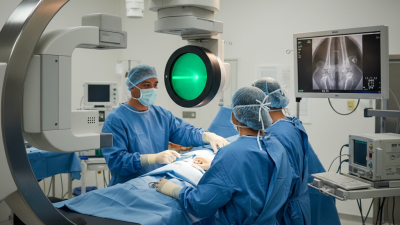
A C-arm image intensifier is a vacuum-based detector that converts X-rays into a visible image. It uses an input phosphor, photocathode, electrostatic lenses, and an output screen. A camera then sends the image to the surgical monitor.

Its main advantage is real-time fluoroscopy with strong brightness gain. Common field sizes include 9, 6, and 4.5 inches. Smaller fields improve detail but may require repositioning. Image intensifiers can also show pincushion distortion, veiling glare, and reduced clarity near the edges. These limits matter during orthopedic, pain-management, and vascular procedures.

The ICRP Publication 85 reports that temporary skin injury may begin near a cumulative dose of 2 Gy. The IAEA Safety Reports Series No. 40 also identifies fluoroscopy as a significant source of patient and staff exposure. A supplier should therefore provide dose-rate data, calibration records, service history, and compatibility details. A low price is not enough. A high-resolution specification sheet can still hide poor maintenance.

Tips: Check the input field size, resolution, contrast, lag, and distortion. Ask for real fluoroscopy images, not only laboratory samples. Confirm replacement support and detector alignment. Older technology is not automatically inferior, but outdated calibration can be. Evaluate the complete C-arm system, including the generator, software, monitor, and shielding, rather than judging the image intensifier alone.

How to Evaluate Chinese Image Intensifier Suppliers

Best China C Arm Image Intensifier Supplier?

Evaluating Chinese image intensifier suppliers requires more than comparing prices. The 2024 Grand View Research report valued the global C-arm market at approximately US$2.1 billion in 2023. It also identifies surgical imaging demand as a steady growth driver. This market pressure can encourage faster production, but quality checks must remain independent.

Request measured data for spatial resolution, contrast ratio, input field sizes, distortion, lag, and entrance exposure. Ask for test conditions, not only attractive specification sheets. IEC 60601-2-54 compliance supports safety evaluation, while ISO 13485 certification indicates a controlled medical-device quality system. Still, certificates do not prove every production batch performs equally.

Inspect sample images at low and high exposure. Look for edge distortion, uneven brightness, and delayed image response. Review calibration records, component traceability, aging tests, warranty terms, and replacement timelines. A reliable supplier should explain failure rates and corrective actions clearly. The 2023 Research and Markets industry analysis highlights replacement demand and service capability as important factors in medical imaging procurement. That detail is easy to overlook. I would also arrange a factory audit, preferably with a qualified imaging engineer. One concern remains: remote demonstrations may hide performance changes after prolonged operation. Ask for independent acceptance testing before final approval.

Best China C Arm Image Intensifier Supplier? - How to Evaluate Chinese Image Intensifier Suppliers

Evaluation Dimension What to Check Relevant Technical or Commercial Benchmark Evidence to Request Suggested Weight
Regulatory Compliance Confirm that the supplier and the specific image-intensifier assembly are legally eligible for the target market. For China, verify applicable NMPA registration or filing requirements. For export markets, check whether the complete C-arm system requires CE marking under the applicable EU medical-device rules, FDA clearance, UKCA, or other local authorization. Valid certificates, product registration details, declaration of conformity, quality-system certificate, and a model-specific regulatory statement. 20%
Input Field of View Match the intensifier entrance field to the intended clinical application and C-arm optical design. Common configurations include approximately 9-inch, 6-inch, and 4.5-inch selectable fields. A larger field supports broader anatomy; a smaller field generally improves detail for focused imaging. Official datasheet, dimensional drawing, field-selection method, and confirmation that the stated field size is the input field rather than the display size. 10%
Spatial Resolution Review resolution across all selectable fields and assess the test method. Medical X-ray image intensifiers are commonly specified in line pairs per millimetre. Higher values indicate finer detail, but results depend on field size, test geometry, focal spot, and image-processing settings. Resolution curves or test reports for each field, including test phantom, measurement distance, operating mode, and acceptance limits. 15%
Conversion Performance Compare brightness gain, conversion efficiency, contrast behavior, and image quality under clinically relevant exposure conditions. Brightness gain is normally considered as the combination of minification gain and flux gain. Specifications should be compared only when measurement conditions are equivalent. Factory test report, brightness-gain definition, exposure conditions, fluoroscopy dose range, and sample images or independent test results. 10%
Distortion and Image Artifacts Check geometric distortion, veiling glare, lag, shading, blooming, and stability when changing field size. Lower distortion and consistent output across the active field are preferred. Artifact performance should be evaluated using standardized test images rather than marketing photographs. Distortion test images, artifact inspection records, field-switching test results, and failure criteria used during final inspection. 10%
Mechanical and Electrical Compatibility Confirm fit, mounting orientation, high-voltage requirements, connector configuration, optical coupling, and communication interfaces. The assembly must match the C-arm's mechanical envelope, power supply, image-acquisition chain, shielding arrangement, and control software. Interface control document, 2D/3D drawings, connector pinout, power requirements, integration procedure, and compatibility test record. 15%
Reliability and Service Life Assess operating life, environmental limits, production consistency, and replacement availability. Review rated operating conditions, storage and transport limits, vibration testing, burn-in procedures, failure-rate data, and spare-unit availability. Do not accept an unqualified “long life” claim. Reliability test plan, burn-in records, environmental test reports, warranty terms, corrective-action procedure, and spare-parts policy. 10%
Quality Management Evaluate incoming inspection, process controls, calibration, traceability, and nonconformance handling. A documented medical-device quality system, commonly aligned with ISO 13485, should cover design, manufacturing, supplier control, production records, and post-market feedback. Current quality certificate, audit summary, batch traceability example, calibration records, inspection checklist, and CAPA samples with confidential information removed. 10%
Commercial and Technical Support Measure response quality, engineering support, documentation, training, and after-sales coverage. A capable supplier should provide a named technical contact, clear response times, installation guidance, troubleshooting procedures, and support for local regulatory documentation. Support-service-level agreement, escalation process, user manual, service manual, training plan, warranty scope, and reference-project evidence without undisclosed personal data. 5%
Recommended Decision Rule 100%
Shortlist suppliers only after document verification, technical compatibility review, and sample or acceptance testing. Regulatory compliance and system compatibility should be treated as pass/fail requirements, not offset by a lower purchase price.

Key Technical Specifications and Quality Standards

Choosing a China C-arm image intensifier supplier requires more than comparing prices. Start with the optical specifications. A practical system may offer 9, 6, and 4.5-inch field sizes for different surgical views. Check limiting resolution, usually measured in line pairs per centimeter. Contrast ratio, conversion factor, distortion, and veiling glare also deserve careful review.

Ask for measured data, not only catalog claims. Stable brightness should remain visible during low-dose fluoroscopy. Image lag must be controlled when instruments move quickly. The supplier should explain input phosphor construction, output window quality, and compatibility with the C-arm camera and monitor. Small details matter. Request test images at several dose levels. A single factory image proves very little.

Quality standards provide another filter. Verify an ISO 13485-based quality management system and documented production traceability. Electrical safety and essential performance should align with applicable IEC 60601 requirements. Ask for inspection records, calibration methods, environmental testing, and service procedures. Supplier audits are useful, but they cannot replace independent verification. I have found that incomplete distortion data often creates uncertainty after installation. That weakness should be discussed openly. A reliable supplier will share acceptance criteria, warranty conditions, replacement timelines, and technical training plans before purchase. Language differences can cause mistakes. Confirm every tolerance in writing.

Comparing Supplier Manufacturing and Support Capabilities

Choosing the best China C-arm image intensifier supplier requires more than comparing quotations. Manufacturing discipline matters. MarketsandMarkets’ 2024 analysis places the global C-arm market in the low-single-digit billions, with mid-single-digit annual growth expected. That growth increases pressure on suppliers to deliver consistent imaging, not just attractive prices. Ask for measured resolution, image lag, detector uniformity, thermal performance, and factory quality records. IEC 60601-2-54 compliance should be verified through current test documentation. ISO 13485 certification also matters. The ISO Survey 2023 recorded more than 37,000 ISO 13485 certificates worldwide, but certification alone does not prove strong production control.

Support capability often separates a reliable supplier from a difficult one. Request documented response times, spare-part availability, calibration procedures, and remote troubleshooting coverage. A practical supplier should provide installation training with real operating steps, including positioning, exposure checks, and image-quality verification. Service records should identify serial numbers, replaced parts, test results, and technician qualifications. The comparison is not perfect. Some suppliers communicate well before delivery, then respond slowly after installation. That gap matters. Ask for references from hospitals using similar surgical workloads. Review downtime data, not only testimonials.

Tips: Compare a written service-level agreement with the quotation. Confirm local-language training, warranty exclusions, software-update procedures, and replacement timelines. Request sample acceptance-test forms before payment. A short video call with the production and service teams can reveal more than a polished brochure.

Best China C-Arm Image Intensifier Supplier? Comparing Manufacturing and Support Capabilities

This procurement benchmark weights the capabilities that most directly affect C-arm image-intensifier reliability, compliance, serviceability, and long-term operating cost. The percentages represent evaluation priorities rather than company-specific claims.

How to use this chart: Request documented evidence for each category, including quality-system certification, regulatory compliance, optical and image-performance test reports, production traceability, spare-parts availability, warranty terms, and technical response procedures.

How to Select the Best Supplier for Your Needs

Choosing the best China C-arm image intensifier supplier requires more than comparing prices. Performance matters. Ask for evidence.

Review resolution, contrast, distortion, lag, input field sizes, and conversion efficiency. These specifications affect anatomy visibility during demanding procedures.

Request complete test data, calibration records, and compatibility details for your C-arm system. A reliable supplier should explain how each value was measured, not only display attractive numbers.

Quality control should be visible. Check whether the manufacturer follows a documented medical-device quality system and provides relevant safety test reports. Confirm production traceability, inspection procedures, packaging protection, and replacement-part availability. A factory video is helpful, but it cannot replace an audit or sample evaluation. Details reveal weaknesses.

Technical support also matters after delivery. Ask about installation guidance, response times, warranty limits, and troubleshooting channels. Review several customer references, preferably from hospitals using similar imaging workloads. A low quotation may hide weak service or unstable lead times. I would avoid choosing from price alone. My own evaluation approach is not perfect; supplier claims still require independent verification. Request a sample report, clarify acceptance criteria, and record every promise in writing. Small misunderstandings can become expensive downtime.

Go to Top