Why Choose Lab Ptfe Beaker for Your Laboratory Needs?
In laboratory environments, precision and safety are paramount. The use of a Lab Ptfe Beaker can significantly enhance experimental outcomes. These beakers are made of high-quality PTFE, known for its excellent chemical resistance. This means they can handle a variety of corrosive substances without degrading.
Moreover, these beakers provide reliable results due to their non-stick properties. This feature allows for easy cleaning and minimizes cross-contamination between experiments. Many researchers have experienced the frustration of traditional glass or plastic beakers failing under harsh conditions. Lab Ptfe Beaker mitigates these issues effectively.
It is essential to reflect on your laboratory's needs. Choosing the right beaker impacts data accuracy and overall safety. Investing in Lab Ptfe Beaker can lead to better research outcomes and laboratory efficiency. These considerations make it clear why so many laboratories prioritize PTFE beakers for their critical work.
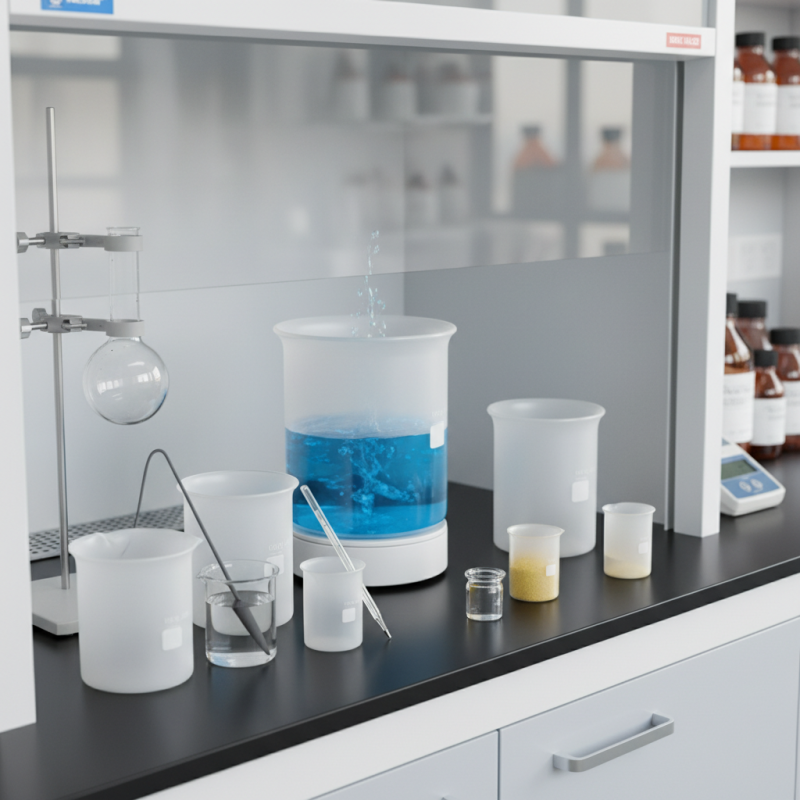
Understanding the Properties of PTFE in Laboratory Beakers
PTFE, or polytetrafluoroethylene, is a synthetic polymer known for its exceptional properties. In laboratory settings, PTFE beakers are highly favored due to their unique chemical resistance. They withstand a wide range of harsh substances, such as acids and bases. This durability is a significant asset for labs handling various chemicals. Users often find that PTFE beakers do not react with solutions, maintaining the integrity of experiments.
Additionally, PTFE has a low friction coefficient. This means that substances slide easily within the beaker. Clean-up becomes straightforward, saving valuable time. However, some users report challenges in measuring precise volumes due to the beaker's non-wettable nature. While this attribute ensures that beakers resist sticking, it can complicate certain applications.
Temperature resistance is another crucial characteristic. PTFE beakers function well under extreme conditions. They can endure temperatures from -200°C to 260°C without deforming. Still, caution is advised when using PTFE under specific high-pressure scenarios. Overall, PTFE beakers represent a reliable choice. However, careful consideration of their limitations is essential during selection.
Advantages of Using PTFE Beakers in Chemical Applications
PTFE beakers offer significant advantages for chemical applications in laboratories. Their resistance to chemicals makes them ideal for handling corrosive substances. These beakers are non-reactive, ensuring that your samples remain pure. They won’t degrade under harsh conditions, which is critical when accuracy is paramount. With a wide temperature range tolerance, PTFE beakers can function in extreme settings, making them versatile for various experiments.
Another benefit is their ease of cleaning. PTFE surfaces repel many substances, making residue removal simpler. This is particularly useful when working with sticky or viscous materials. However, one must be cautious when using them with certain chemicals, as no material is universally safe. Regular inspection of these beakers can help ensure they remain reliable. Despite their numerous advantages, one must consider cost and availability; they can be more expensive than glass or plastic options. Balancing these factors is essential for effective laboratory management.
Why Choose Lab Ptfe Beaker for Your Laboratory Needs? - Advantages of Using PTFE Beakers in Chemical Applications
| Feature | PTFE Beaker | Traditional Glass Beaker |
| Chemical Resistance | Excellent, resists most acids and solvents | Limited, may react with strong acids |
| Heat Resistance | Can withstand high temperatures | Shatters at high temperatures |
| Durability | Highly durable, non-breakable | Fragile, breaks easily |
| Weight | Lightweight | Heavier than PTFE |
| Cleaning | Easy to clean, non-stick surface | Requires careful cleaning |
| Cost | Generally higher | Generally lower |
Comparing PTFE Beakers with Other Laboratory Materials
When considering materials for laboratory beakers, PTFE offers unique advantages. Unlike glass or polypropylene, PTFE beakers resist a broader range of chemicals. This makes them ideal for hazardous substances that can corrode other materials. Their non-stick surface can enhance efficiency during experiments, as substances are less likely to adhere to the walls.
In comparison, glass beakers provide good transparency but can break easily. Polypropylene is less expensive but may not withstand high temperatures. PTFE beakers are reliable under extreme conditions. However, they may not be suitable for every lab setting. Their cost can be a drawback for some institutions. It’s essential to evaluate budget constraints alongside safety and performance needs.
While PTFE beakers excel in chemical resistance, they may not be as readily available as other materials. This could lead to delays in procurement for urgent needs. Ultimately, considering all features and limitations can aid in making an informed choice. In a high-stakes lab environment, reliability is critical. The decision should align with both operational requirements and resource availability.
Best Practices for Maintaining and Cleaning PTFE Beakers
When using PTFE beakers in laboratory settings, proper maintenance and cleaning are essential. A study by the American Chemical Society shows that residues left in beakers can affect subsequent experiments. Therefore, it's vital to clean them thoroughly after each use.
To maintain PTFE beakers, rinse them immediately after use. This prevents stubborn residues from forming. Use warm, soapy water for everyday cleaning. Avoid abrasive sponges that can scratch the surface. Scratches can harbor contaminants and weaken the beaker's integrity.
For deeper cleaning, consider using a mixture of water and mild acid such as vinegar. This method helps remove more stubborn residues. However, be cautious with acid concentrations. It's crucial to ensure that any cleaning solution is compatible with PTFE materials. Regular inspections for wear or damage are equally important. If you notice any significant wear, replacing the beaker may be necessary to ensure lab safety.
Cost-Effectiveness of PTFE Beakers for Long-Term Laboratory Use
When considering laboratory equipment, PTFE beakers stand out for their cost-effectiveness. These beakers offer significant advantages over other materials. They resist chemicals, heat, and wear, making them a reliable choice for long-term use. A PTFE beaker can last years, reducing replacement costs and saving money over time.
Investing in PTFE beakers is sensible for any scientific lab. Their non-stick surface simplifies cleaning, minimizing downtime. Fewer cleaning agents are needed, which can also cut costs. However, it's important to reflect on the initial investment. While PTFE beakers may cost more up front, they ultimately prove economical. When assessing your lab's needs, think about the lifespan and utility of these beakers. They can handle harsh environments, but they should be used correctly to maximize their lifespan and effectiveness.
Some may wonder if other options could provide better value. It's vital to evaluate all choices based on specific lab requirements. PTFE beakers may not be the best fit for every situation. However, for many labs, their durability and long-term savings make them a wise choice. Balancing cost with practicality can lead to improved efficiency and reliability in your lab environment.
Why Choose Lab PTFE Beakers for Your Laboratory Needs?
This chart illustrates the cost-effectiveness and durability of PTFE beakers compared to traditional glass and plastic beakers over an extended period of use in laboratory settings.